
Buying at an online estate auction is one of the most accessible ways to find original artwork, vintage furniture, estate jewelry, and one-of-a-kind collectibles, often at prices well below retail. But if you've never bid online before, the process can feel unfamiliar. What's a buyer's premium? How does proxy bidding work? What happens if you win?
This guide walks through each step, from registering your first account to picking up (or shipping) the piece you won. Think of it as a friendly orientation before your first sale.
What are online estate auctions, exactly?
An online estate auction is a sale where items from one or more estates are listed on a digital platform and sold to the highest bidder. The items might come from a single household being downsized, a probate estate, a collector liquidating a portion of their holdings, or several consignors combined into one themed sale.
Unlike a garage sale or a fixed-price listing, auctions are competitive. Bidders set the price, and the market decides what something is worth. That dynamic can work strongly in a buyer's favor, especially for items that haven't yet attracted mainstream attention.
Many auction houses, including firms running online estate sales in the Los Angeles area, now conduct most or all of their bidding digitally. You can participate from your kitchen table, your office, or your phone.

How to register and set up your account
Before you can place a bid, you'll need to create an account on the auction platform hosting the sale. Registration is usually free and takes just a few minutes. You'll typically provide:
- Your name and contact information
- A valid email address
- A credit card on file (used as a guarantee, not charged until you win something)
Some houses require a separate approval step for higher-value sales, so register at least a day or two before the auction closes. Don't wait until the final hour and discover you can't bid.
Browsing the catalog and previewing lots
Once registered, you can browse the full lot catalog. Each lot has photos, a title, a description, and often a condition report or condition notes. Larger auction houses provide multiple high-resolution images, sometimes including close-ups of signatures, marks, damage, or hardware.
Reading condition reports
A condition report describes the physical state of the item: scratches, chips, repairs, foxing on paper, replaced parts, fading. These are not guarantees. They're professional observations. Read them carefully, and if something isn't mentioned that you care about, ask. Most auction houses welcome questions before the sale closes.
Keep in mind that estate items are sold "as is" in nearly every case. That's standard across the industry, not a red flag. It simply means you're buying a pre-owned item with the wear its history implies.
In-person previews
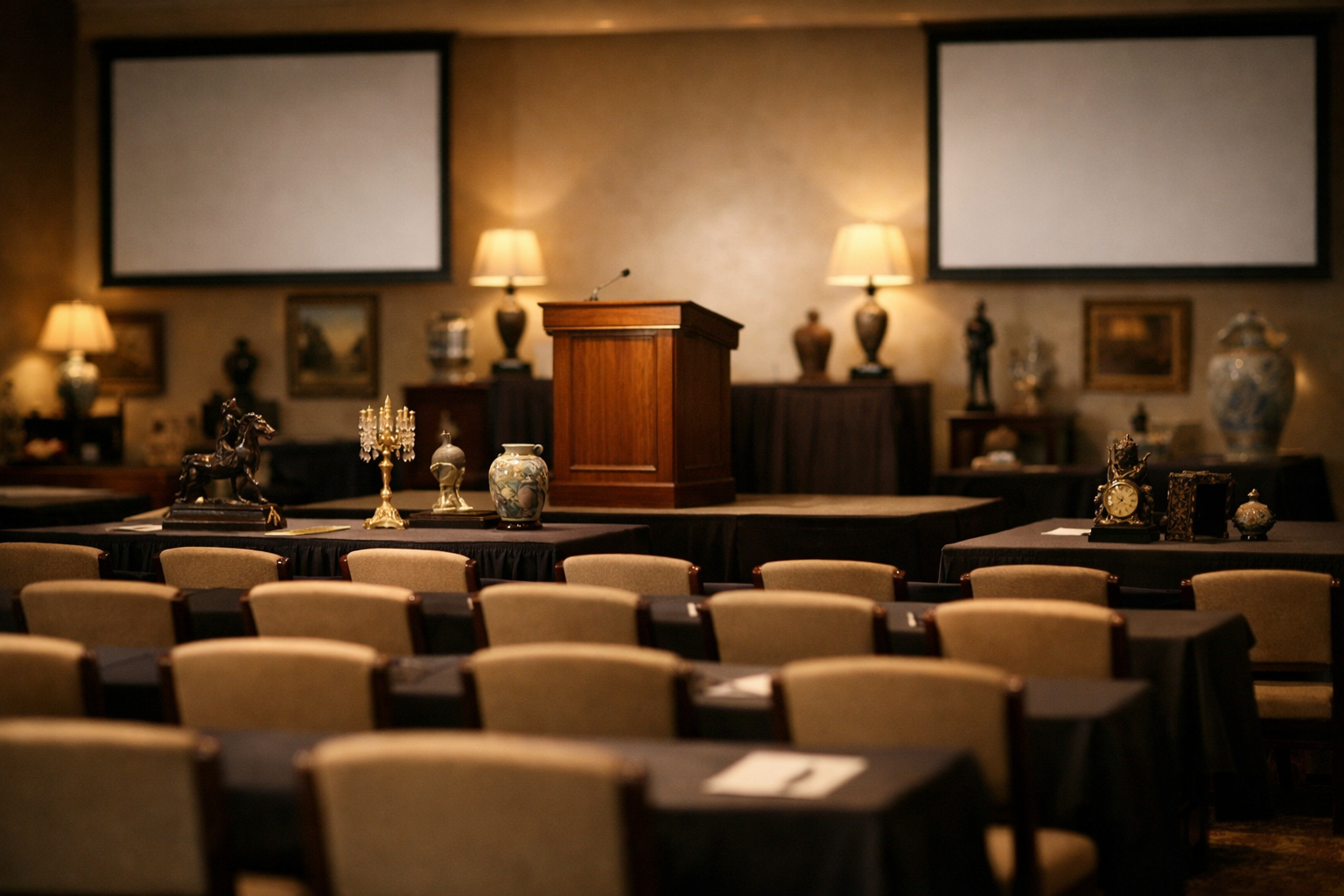
Many auction houses offer a preview day where you can see lots in person before bidding. If you're local and considering a significant purchase, this is worth your time. Photos don't always capture scale, color accuracy, or surface texture the way your own eyes can.
How bidding works: proxy bids, timed auctions, and soft closes
This is where first-time bidders often have questions. There are a few bidding formats you'll encounter.
Proxy bidding (max bids)
Most online auctions use proxy bidding. You enter the maximum amount you're willing to pay, and the system bids on your behalf in preset increments, only going as high as necessary to keep you in the lead. If your max bid is $500 and the current bid is $200, the system might place you at $210. It won't jump to $500 unless another bidder pushes it there.
This is not a commitment to pay your max. It's a ceiling. You might win for far less.
Timed auctions vs. live online bidding
A timed auction runs for a set period, often several days. Bidders place their bids whenever they like before the closing time. There's no auctioneer calling lots in real time.
A live online auction, by contrast, mirrors a traditional auction. A real auctioneer works through lots one by one, and remote bidders compete alongside any in-room participants through a live video or audio feed. These move fast. If you're new, a timed auction is a gentler starting point.
Staggered and soft closes
To prevent last-second "sniping" (placing a bid in the final second so no one can respond), many platforms use a soft close or staggered close. Here's how it works: if a bid is placed in the final few minutes, the clock extends, giving other bidders a chance to respond. Lots may also close in staggered groups rather than all at once, so the system isn't overwhelmed and bidders can focus.
This makes the closing period fairer. It rewards the person willing to pay the most, not the person with the fastest internet connection.
What happens when you win
Buyer's premium and total cost
The hammer price (your winning bid) is not the final amount you'll pay. Almost every auction adds a buyer's premium, a percentage on top of the hammer price that goes to the auction house. Premiums vary widely by house and sale. You may also owe applicable sales tax.
Check the auction's terms and conditions before you bid. The premium percentage and any other fees are always disclosed there. Factor them into your maximum bid so you aren't surprised.
Payment
After the sale closes, you'll receive an invoice, usually by email. Payment is typically due within a few business days. Accepted methods vary but commonly include credit card, wire transfer, and sometimes cash for local pickup. The credit card on file may be charged automatically if stated in the auction terms.
Pickup and shipping
Winning bidders generally have two options: pick up the item at the auction house's location, or arrange shipping. Many firms coordinate shipping through third-party carriers and can provide quotes before or after the sale. For large or fragile items like furniture, sculpture, or framed artwork, professional packing and crating may be available at additional cost.
If you're bidding on Los Angeles online auctions from out of state, confirm the shipping options before you bid. Some lots may be pickup only.
Practical tips for first-time bidders
- Set a budget before you browse. It's easy to get caught up in the excitement. Decide your ceiling for each lot, include the buyer's premium in your math, and stick to it.
- Read every word of the description. "Attributed to" is not the same as "by." "Style of" is not the same as "period." These distinctions affect value significantly.
- Use the preview. If you're local, go see items in person. If you're remote, request additional photos or a condition report.
- Start small. Bid on a few lower-value lots first to get comfortable with the platform and the process before chasing something expensive.
- Watch the closing carefully. Even with soft-close protections, it helps to be at your screen during the final minutes so you can respond to competing bids.
- Ask questions. Auction staff are generally happy to help. If you don't understand a term, a fee, or a lot description, reach out before you bid.
Frequently asked questions
Do I have to pay if I accidentally bid?
Bids are considered binding in most auctions. Some platforms allow you to retract a bid if you contact the auction house immediately, but this is handled case by case. The safest approach: double-check every bid before you confirm it.
Can I bid on multiple lots at once?
Yes. You can place proxy bids on as many lots as you like. Just be mindful that you could win all of them, so bid only on what you're prepared to pay for.
What if the item I receive is damaged or not as described?
Most auction houses have a dispute process, but remember that estate items are sold as is. If the item was accurately described and photographed, you likely won't have grounds for a return. If something was genuinely misrepresented, contact the house promptly.
Is it safe to buy art and jewelry through an auction online?
Reputable auction houses authenticate and research their lots, provide detailed condition reports, and stand behind their descriptions. Look for established firms with a track record, clear terms, and responsive customer service. Hughes Estate Sales & Auctions, for example, has over 45 years of experience handling fine art, jewelry, watches, and specialty collections in the Greater Los Angeles area.
Ready to start bidding?
The best way to learn is by doing. Browse a current catalog of online estate sale auctions, read through a few lot descriptions, and register for an upcoming sale. Place a proxy bid on something small that catches your eye. Once you've been through the cycle once, the second time feels completely natural. And you might just find something remarkable along the way.
