
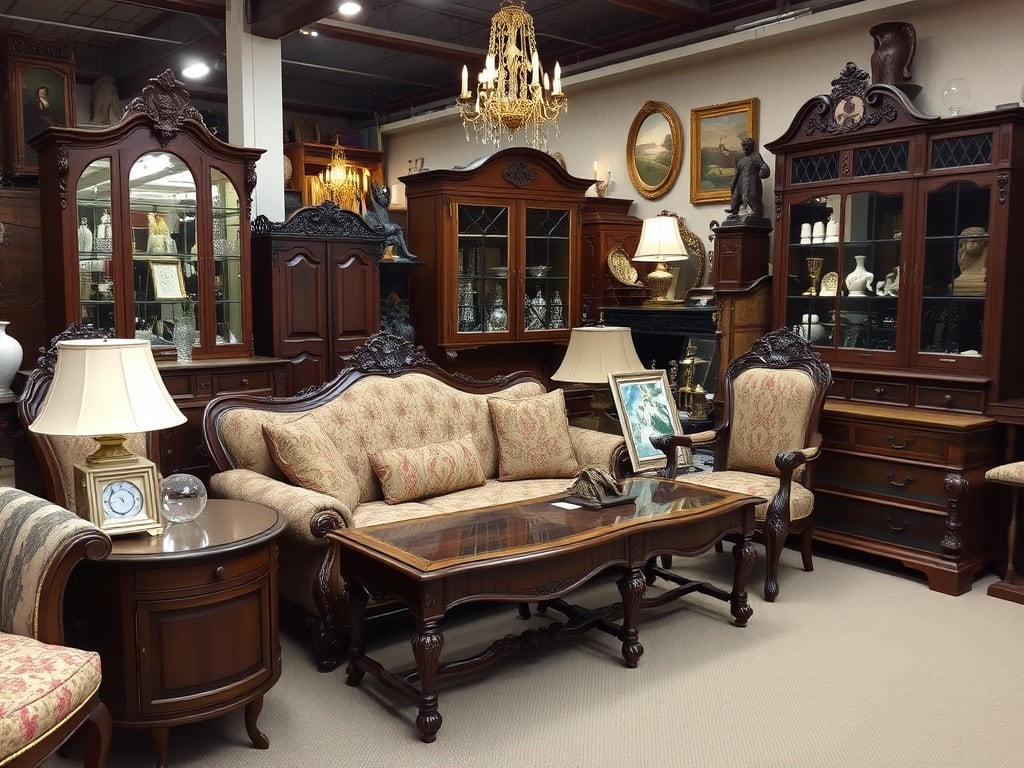
Valuing antiques correctly is the first step toward understanding their true worth. It is also the only way to ensure you receive a fair price when you sell.
We see it every week at our Los Angeles showroom. A client walks in with a box of porcelain they carefully wrapped in bubble wrap, convinced it is the most valuable thing in their estate. It often turns out to be common standard china. But the scratched-up credenza they left in the garage? That turns out to be a signed George Nelson piece worth thousands.
Determining value is tricky because the market changes constantly. In 2026, heavy Victorian furniture is having a moment, but midcentury modern furniture is still the king of Los Angeles. Before you toss anything into the donation pile, follow these four tips to see if you might be holding a hidden treasure.
Key Takeaways
- Research sold listings rather than asking prices to get a realistic idea of what your item is worth in the current market.
- Consult with professional appraisers who can identify specific rarities like a first edition printing with a misprint or hallmarks indicating Sterling silver purity.
- Inspect every item for maker's marks, stamps, or labels which are often hidden on the underside of furniture or the back of artwork.
- Avoid cleaning, polishing, or repairing your antiques before a valuation because removing the natural patina can destroy their value.
- Understand that market trends change constantly, so what was valuable ten years ago may not be the same today.
1. Do Your Own Research (But Look at the Right Numbers)
Finding out how much your antiques are worth takes patience. It was once common practice to rely on printed price guides or by contacting an auction house directly for sales results. Today, research can be done online.
Be careful where you look. A common mistake is looking at asking prices on sites like eBay. Just because a seller asks for $500 does not mean the item is worth $500. You need to filter for sold listings to see what buyers actually paid.
Market demand fluctuates. A specific antique clock might have sold for a high price five years ago, but that does not guarantee it will fetch the same price today. We recommend checking our impressive auction results to see real sales data from the Los Angeles market.
2. Talk to the Experts
Online research is a great start, but nothing beats a professional eye.
At Hughes Auctions, we specialize in finding value where others miss it. You might see a vintage tapestry. We see a rare Al Loving work of fiber art that art collectors are hunting for. You might see a simple clay pot. We see a piece of Doyle Lane studio pottery that is highly collectible.
If you are unsure about an item, do not guess. You can request a professional appraisal or schedule a walk-through consultation. An expert can tell you in minutes if your item is worthy of a global online auction or better suited for a local sale.
3. Check for Maker’s Marks
One of the first things an expert will do is examine the piece for identifying marks or inscriptions. These telltale signs of authenticity can transform an overlooked flea market purchase into an investment quality treasure.
- On Furniture: Look underneath the seat or inside the top drawer. A simple plastic chair might actually be an authentic Eames shell chair if you find the Herman Miller stamp on the bottom.
- On Jewelry: Don't just look at the stones. When you sell estate jewelry, the value is often in the brand name (like Tiffany & Co.) or the purity stamp (like 750 for 18k gold) hidden inside the band.
- On Art: Examine the reverse side of the canvas and frame. Appraisers frequently discover important clues like original gallery labels, exhibition stickers, or provenance documentation that authenticate a piece even when the artist's signature has deteriorated over time.
Get a magnifying glass and check every inch of your item. That small stamp is often the key to its value.
4. Do Not Repair or Restore
You might think that polishing a tarnished silver bowl or refinishing a scratched table will improve its value.
Do not do it.
In the world of antiques, the natural age and wear of an item is called patina. This layer of age is proof of authenticity. When you scrub it off, you often scrub off the value.
We have seen clients attempt to clean and revarnish an old oil painting, only to realize they destroyed its collector value. Items in their original condition are rare. Any repair or restoration could destroy the one element of the piece that has true historical significance. Do not risk it until you have the piece properly valued.
Ready to sell? From single items to full estates, we help Los Angeles sellers get the highest return. Schedule a complimentary walk-through today. Contact Us to Start.
FAQs
1. How can I tell if a piece of furniture is valuable?
Check for quality construction details like hand-cut dovetail joints in the drawers and the use of solid heavy hardwoods rather than particle board.
2. Should I clean or polish my antiques before selling them?
No, you should never clean an item before a valuation because scrubbing away the natural patina can significantly lower its value.
3. Where are maker's marks usually hidden?
On furniture, look underneath the seat or inside drawers; on art, check the back of the frame; and on jewelry, look for stamps on the clasp or inner band.
4. Is an item valuable just because it is old?
Not necessarily; value is determined by scarcity and current market demand, so a rare 1970s chair can be worth far more than a common 1850s book.
5. How do I get a professional appraisal in Los Angeles?
You can submit photos of single items through the Hughes Auctions website or schedule an in-home walk-through if you have an entire estate.
