
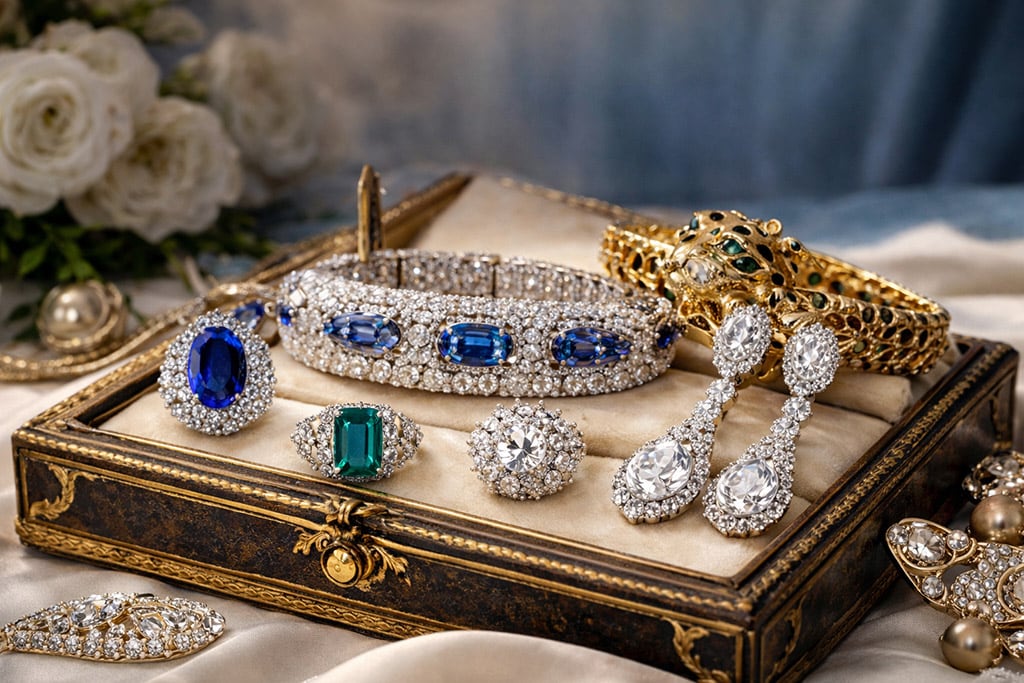
Hidden in the Jewelry Box: How to Identify & Sell Estate Jewelry in Los Angeles
Inheriting a jewelry box can be an emotional experience. Amidst the memories, there is often a practical question: “What is this actually worth?” Tucked away in velvet pouches or forgotten drawers could be pieces of significant value—or sentimental costume jewelry. Knowing the difference is crucial.
Los Angeles is one of the world's premier markets for vintage and estate jewelry, with buyers hungry for unique pieces from Art Deco, Mid Century, and Victorian eras. However, navigating this market without guidance can lead to costly mistakes. Selling to a local pawn shop or a generic online buyer often means receiving only a fraction of a piece's true market value.
At Hughes Auctions, we have spent decades helping families connect their treasured heirlooms with passionate collectors globally. This guide will walk you through the initial steps of identifying potential treasures and explain the best path to selling them in Los Angeles.
What To Know
- It is important to understand that “Estate” refers to previously owned items, while “Vintage” pieces are at least 40 years old and “Antique” jewelry must be over 100 years old.
- Using a simple magnifying glass to check for hallmarks on the inside of rings or clasps can reveal metal purity and maker's marks that significantly impact value.
- You should never attempt to clean vintage jewelry with harsh chemicals as this can damage delicate settings or remove the desirable patina that collectors prize.
- Obtaining a fair market value appraisal is essential for selling purposes because it differs significantly from an insurance replacement appraisal.
- Consigning high-value items to a curated auction creates a competitive environment that often yields higher prices than selling directly to a local dealer.
Estate vs. Vintage vs. Antique: What's the Difference?
Before you begin sorting, it is helpful to know industry terms.
- Estate Jewelry: This is a broad term for any jewelry that has been previously owned. A ring bought five years ago is technically “estate jewelry.”
- Vintage Jewelry: Generally refers to pieces that are at least 40 years old but less than 100. Think bold, chunky gold from the 1970s or glamorous cocktail rings from the 1950s.
- Antique Jewelry: These are pieces that are at least 100 years old, such as delicate Edwardian filigree or Victorian mourning jewelry.
Why does this matter? Age influences style, materials, and collector demand. A signed Art Deco bracelet will have a vastly different market than a modern diamond solitaire.
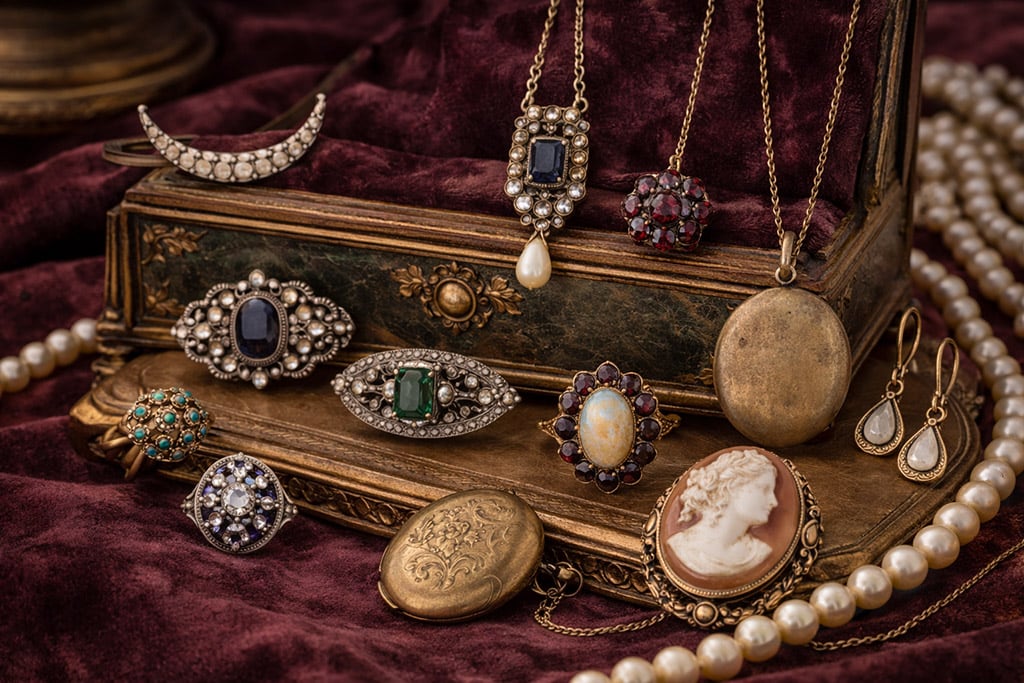
The First Look: How to Spot Value at Home
You don't need to be a gemologist to do an initial assessment. Grab a magnifying glass or a jeweler's loupe and look for these clues.
1. Check for Metal Hallmarks
Look on the inside of ring bands, earring posts, or necklace clasps for small stamped numbers.
- Gold: Look for 18k (or 750), 14k (or 585), or 10k (or 417). “GF” or “GP” means Gold Filled or Gold Plated, which has significantly less value.
- Platinum: Look for Plat, 950, or 900. This is a heavy, durable metal often used in high-end vintage pieces.
- Silver: Look for Sterling or 925.
2. Find the Maker's Mark
Next to the metal stamp, you might see a logo, a name, or initials. This is the designer's signature. Finding a mark from a renowned house like Cartier, Tiffany & Co., or Van Cleef & Arpels immediately elevates a piece from “valuable” to “highly collectible.” Even lesser-known designers can have a strong following at auction.
3. Examine the Gemstones & Setting
How are the stones held? In fine jewelry, stones are securely set with metal prongs or bezels. If you see glue residues on the back of a stone, it is almost certainly costume jewelry.
- Tip: Do not assume a stone is “fake” just because it looks different. Older diamond cuts like “Old Mine” or “European Cut” look less sparkly than modern diamonds but are highly prized by collectors for their unique character.
The Danger of “We Buy Gold” Shops
When families need to liquidate jewelry quickly, they often turn to local storefronts advertising immediate cash for gold.
While convenient, these businesses typically buy jewelry based solely on the melt value of the metal. They may pop out the gemstones to be discarded and weigh the gold. This is a tragedy for a piece of fine vintage craftsmanship. A signed Art Nouveau brooch is worth exponentially more as a piece of art than its weight in scrap gold.
The Professional Route: Appraisals & Auctions
To realize the true market value of your items, you need a strategy that puts them in front of end-users and collectors, not just middlemen.
Step 1: Get a Professional Valuation
If you have items you believe are valuable, the first step is a professional assessment. At Hughes, we offer professional appraisals by specialists who understand not just gemology, but art history and current market trends. We can tell you what your item is worth in today's resale market.
Step 2: Consign to Auction
For fine estate jewelry, an auction is often the best selling method. It places your items on a global stage, allowing collectors from Los Angeles to London to compete against each other. This competitive bidding is what drives prices beyond what a single dealer can offer.
Our team handles everything: professional photography, cataloging, global marketing, and secure shipping. Learn more about our process for consigning jewelry to an upcoming auction.
Don't let valuable history end up in a melt pile. If you are managing an estate in Los Angeles and need guidance on jewelry, contact us today to schedule a consultation.
FAQs
1. Should I get my jewelry appraised before trying to sell it?
Yes, for any piece you suspect has significant value. A verbal estimation is a good first step, but a formal written appraisal may be necessary for high-value items. Be sure to ask for a “Market Value” appraisal for resale purposes, not an “Insurance Replacement” appraisal, which is typically higher or “Fair Market Value” which can be different than the market it is being sold in (auction vs retail).
2. What is the best way to sell inherited jewelry in Los Angeles?
For fine, vintage, or antique pieces, consigning to a reputable auction house like Hughes is often best. This exposes your items to a global pool of competitive bidders, maximizing the final sale price, rather than selling to a single local dealer for a quick but lower cash offer.
3. How do I know if my jewelry is real or costume?
Look for hallmarks like “14k,” “18k,” or “925” indicating precious metals. Also, check the setting; fine jewelry uses prongs or bezels to hold stones, while costume jewelry often uses glue. A professional evaluation is the only way to be 100% certain.
4. Does broken or damaged jewelry have any value?
Yes. Even if a clasp is broken or a stone is missing, jewelry made of gold, platinum, or silver still holds its metal value. Rare antique pieces can sometimes still be sold to collectors even with damage, as they can be restored.
5. Why sell through an auction instead of to a jeweler?
A jeweler needs to buy your piece at a low enough price to mark it up and sell it for a profit. An auction house acts as an agent, marketing your piece to many potential end-buyers who compete against each other, driving the price up to its true market value.
